
Mailing List
Sign up for our mailing list to get latest updates and offers.
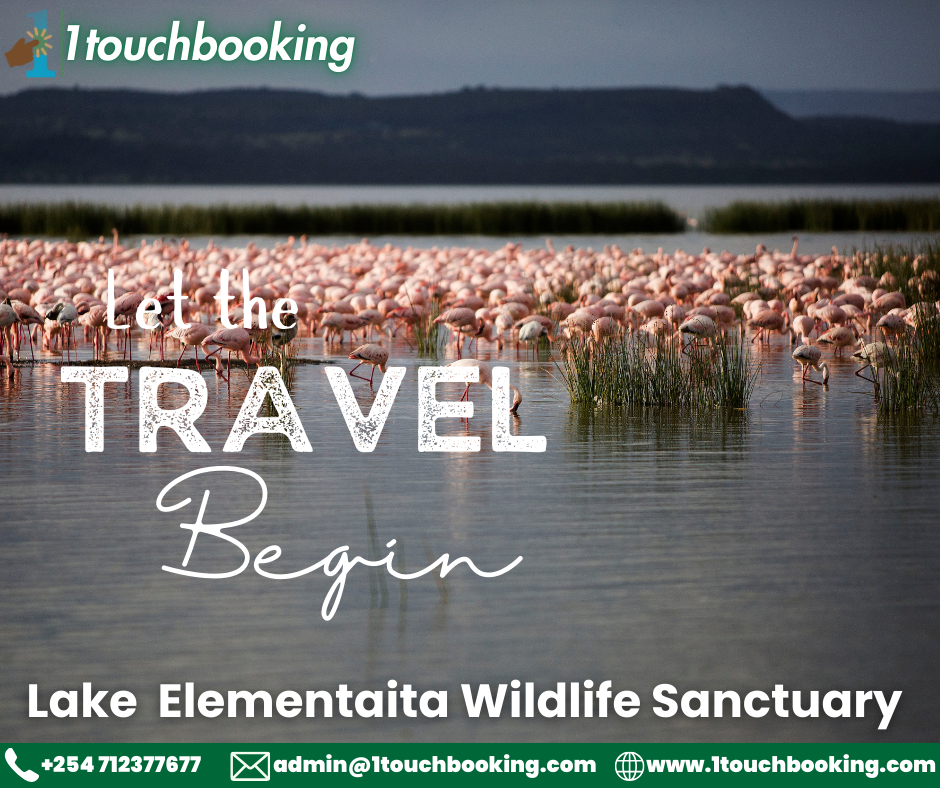
Lake Elementaita basin has one of the oldest archeological sites belonging to the Oldowan period, with stone tools dating to 700,000 years ago found at Kariandusi. The Obsidian mines at the Eburru Mountains are evidence of Obsidian trade dating over 3000 years ago. Subsequently, the region was occupied by pastoral Neolithic, later the Maasai pastoral community who called it “Elementaita”. During the colonial occupation, the whole area between Elementaita and Naivasha was taken over and used for livestock and wildlife ranching by Lord Delamere.
The area around Lake Elementaita was designated an Important Bird Area (IBA), a site of global significance for bird and biodiversity conservation, in 1999. The lake was designated a Ramsar site (wetland of international importance) in 2005. It was gazetted as a National Wildlife Sanctuary in 2010 and listed together with Lakes Nakuru and Bogoria as the Kenya Lakes System in the Great Rift Valley World Heritage Site by UNESCO in 2011.
Over 400 bird species have been recorded in the Lake Nakuru/Lake Elmenteita basin. Elmenteita attracts visiting flamingoes, both the greater and lesser varieties, which feed on the lake's crustacean and insect larvae and on its suspended blue-green algae, respectively. Lake Magadi tilapia were introduced to the lake from Lake Magadi in 1962 and since that time the flamingo population has dwindled considerably. The tilapia attract many fish-eating birds that also feed upon the flamingo eggs and chicks. Over a million birds that formerly bred at Elmenteita are now said to have sought refuge at Lake Natron in Tanzania.
The lake's shores are grazed by zebra, gazelle, eland and families of warthog.
The lake is normally very shallow (less than 1 m deep) and bordered by trona-encrusted mudflats during the dry seasons. During the late Pleistocene and early Holocene, Lake Elmenteita was at times united with an expanded Lake Nakuru, forming a much larger dilute lake. Remnants of the former joined lake are preserved as sediments at various locations around the lake basins, including former shorelines.
Recently the lake level and number of flamingoes has receded as increased human activity has dried up catchment areas.

Member Since Feb 2024
